
Monday Musing: Everton's Second PSR Case
More Than A Game assesses some possible avenues Everton may look to explore in their second PSR case.

This week, Everton head into their third Premier League hearing in the space of six months.
First, there was the initial hearing for a breach of the league’s Profit and Sustainability Regulations (PSR) in the reporting period ending June 30th, 2022. It took place in October and, of course, resulted in a 10-point deduction, which was immediately implemented on November 17th. The Toffees went from 14th to 19th in the blink of an eye.
Then, there was the inevitable appeal, which took place across two-and-a-half days in late February. The result: Everton’s deduction was replaced with a six-point punishment, effective immediately. The league table changed again.
And now, there will be a third hearing, this time regarding a second breach, which occurred in the financial reporting period ending June 30th, 2023.
Whereas previously Everton had been the first ones down the path, as it were, their defence team will on this occasion have had a week to scrutinise the report from the Independent Commission that presided over Nottingham Forest’s case, which also related to a breach in the 2022-23 financial year. Forest, of course, were deducted four points for going over their allowable loss threshold by £34.5million (a 77% higher relative breach than Everton’s first offence).
The precedent set by the previous cases suggests Everton are set to receive another points deduction. The question will be how severe the punishment is, and that will depend on a number of factors.
A decision will be published, by the latest, on April 8th, though it could possibly be as early as April 3rd.
It will only be upon the publication of the Commission’s report that the public will be able to see the details of the case and Everton’s defence. But using what we know based on the previous cases, we can at least speculate as to what the club’s defence may be.
COOPERATION
In their hearing, Forest put forward several mitigating arguments. However, the one that carried weight was that the club cooperated fully with the Premier League throughout the process, providing accurate information and also an “early plea” of guilt.
The Premier League, according to the Commission’s report, “suggested that the combined mitigation provided by the two factors of an early plea and cooperation justifies a discount of two points.” It should be noted that the Premier League initially asked for an eight-point deduction for Forest, prior to any accepted mitigation.
Forest did ask for their “early plea” to be considered as worthy of a third of any punishment (i.e. two points), with a further reward for their cooperation with the Premier League, but the Commission disagreed, and their calculation was spelt out in the report’s conclusion.

David Phillips KC, who chaired the panel for Everton’s first hearing, did not give any grace for cooperating with the Premier League, suggesting this was an expectation for any club. He sided with the league in this instance, with the league arguing the facts of Everton’s case did not constitute mitigation for cooperating.
It must also be stated that both the Appeal Board in Everton’s first case agreed with the original Commission, and did not think the Toffees deserved any additional mitigation for cooperating.
However, it should be noted that this cooperation did not perhaps fall into the “exceptional” category that the Premier League deemed Forest’s level of cooperation to have done.
This is likely to rest on the Appeal Board having determined Everton had provided “incorrect” information to the Premier League. According to assumptions made by the Commission in Forest’s case, the Appeal Board must have deducted some points — albeit the exact total is not known — from the Toffees due to the provision of this incorrect information. It should be noted that the Appeal Board did not judge Everton to have provided this incorrect information intentionally.
The hope for Everton in this case is that they are able to prove an “exceptional” level of cooperation. In their statement on February 26th, in the wake of the Appeal Board’s decision, the club made it clear they remained “fully committed to cooperating with the Premier League in respect of the ongoing proceedings brought for the accounting period ending in June 2023.” An olive branch, perhaps.
If Everton provide correct information in line with the precedent now set out in previous cases, then there should in theory be some level of mitigation. If they are also seen to have admitted the breach, then that too could help. Based on the Forest case, this could be worth up to two points back, which is not to be sniffed at.
DOUBLE JEOPARDY
‘Double jeopardy’ has become something of a shorthand for what legal experts would perhaps instead call a ‘natural justice’ argument — essentially, Everton are very likely to argue they should not be punished twice for the same offence.
Given the nature of a three-year rolling period, Everton have made it clear they see this latest charge as being based on at least two years for which they have already been punished — 2019-2021 (combined due to COVID-19) and 2021-22.
There was also a reference in the Appeal Board’s decision, as well as the original Commission’s report, to “double counting” when it comes to further punishing Everton for their excess loss over the £105m threshold. Naturally, to be punished for two out of three years that have already been penalised would surely constitute double counting.
A solid case, one might feel, though the counter-argument from the Premier League could be that the breach must be treated on its own merits; that it is a separate breach entirely, and let’s not forget that to get there in the first place, Everton must have lost at least £40m — over the allowable losses — in FY 2022-23.
There is also the possibility that being seen as “repeat offenders” could act as an aggravating factor. Everton did not learn their lesson.
A counter-argument from the club would be that due to the timing of their 2021-22 hearing, and then the subsequent decision, there was no time to correct course on the 2022-23 accounts, with that financial year having ended five months earlier.
One would hope that any Commission sees the logic that fans, pundits and journalists would use when it comes to double jeopardy. If Everton are successful with this argument, then it would be logical to think that two-thirds of any deduction would be removed.
LOSS OF SPONSORSHIP
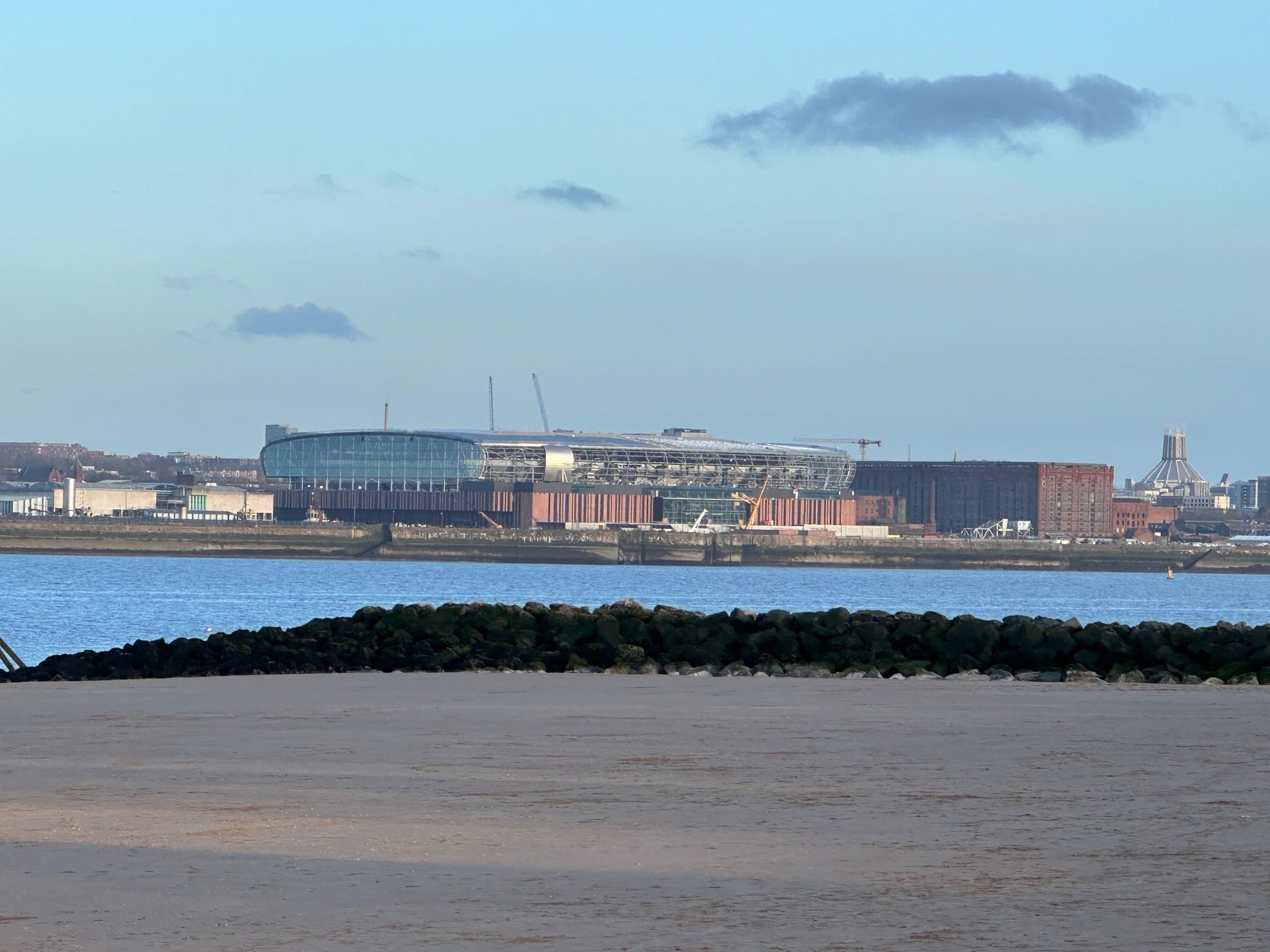
Everton did put forward mitigation based on the loss of their Alisher Usmanov-related sponsorship deals in the first case, but it was very specifically in relation to a Stadium Naming Rights deal for the new ground at Bramley Moore-Dock that, long story short, did not officially exist as Farhad Moshiri had not signed legal paperwork prior to Russia’s invasion of Ukraine and, subsequently, Everton’s decision to cut ties with the Usmanov-backed companies.
Whether that deal, if signed, would have acted as significant mitigation — Everton claimed it was worth £200m — is up for debate, but it is hardly controversial, as unfair as it may seem to some Evertonians, that a Commission did not provide mitigation for something that was not in place.
However, what Everton may point towards in this case, is that FY 2022-23 is the first year in which the loss of their sponsorship deals with USM, MegaFon and Yota will have impacted the club’s accounts.
In early March 2022, Everton decided to suspend all commercial ties with these three companies, amid mounting political and fan pressure, following Russia’s invasion of Ukraine.
USM sponsored Finch Farm and its branding was plastered around Goodison Park; the MegaFon logo, meanwhile, featured on men’s training kits, and the telecom operator acted as the women’s team’s leading sponsor; Yota was the women’s team’s sleeve sponsor.
More Than A Game understands these deals were worth between £20m and £30m per season to Everton, though we will likely have more certainty on the exact amount when the Commission’s report is published.
While USM’s Finch Farm sponsorship deal had been due to expire at the end of the 2021-22 season, a renewal seemed likely, though due to the terms of the suspension, the Liverpool ECHO has reported that Everton were subsequently unable to replace USM, at least in the immediacy.
According to sports barrister Samuel Cuthbert, who spoke exclusively to More Than A Game earlier in March, Everton’s case to include this loss of sponsorship as mitigation could hang on the “loss of chance” argument.

“There may well be something in that. There’s an argument that there’s a loss of chance flowing from the fact of mounting political pressure to dissociate from those companies,” Cuthbert said.
“If you’ve got a sanction that you can hook a loss of chance argument on, that’s certainly a stronger position for Everton.”
However, Cuthbert warned that since Everton took what is likely to be seen as a “moral” decision to cut commercial ties with the Usmanov-backed companies — there was political pressure, but at the time of the decision there was no concrete sanction against the oligarch or these organisations specifically.
Cutherb continued: “It sounds as if that isn’t the case, and it would be more of a moral argument: ‘There is mounting political pressure to dissociate with companies, there is a lot of chance it wouldn’t have been moral for us to keep dealing with them, and that any financial losses flowing from that should be taken into account in mitigation when looking at PSR breaches’.
“There is an argument there, certainly, and it doesn’t fall foul of the same vulnerability that the first case did, in that there wasn’t a signed contract [for a stadium naming rights deal] at the time of Russia’s incursion into Ukraine. The argument is certainly stronger, albeit without a specific sanction to hang the loss of chance argument on, it may be slightly harder to demonstrate that mounting political pressure was sufficient to give rise to the loss of chance.”
Usmanov was sanctioned by the UK government the day after Everton confirmed the suspension of these commercial deals, though whether that will pass weight — since Usmanov, at least on paper, had no links to the club beyond his relationship with Moshiri and the sponsorship deals — remains to be seen.
FOREST’S RESULT AND POSITIVE PLAYER TRADING TREND
Whichever way you want to cut it, the Commission in Forest’s case — compared at least to the original Everton Commission and even the Appeal Board — were lenient. While they did not accept many of Forest’s mitigating arguments, they carved off a third of the punishment for cooperation and an early plea of guilt.
The Commission also seemed to have bought at least partially into Forest’s argument that the Premier League’s request for an eight-point punishment — which while harsh, was based on fair logic when using the Everton case as a reference point — was too severe, due to it being right at the upper limit at what the Everton Appeal Board deemed the correct range for a deduction for a PSR breach — seemingly, between three and nine points.
However, the Commission in Forest’s case also notes that it is not an irrebuttable presumption that immediate points deductions should be the only punishment for a PSR breach.
So, could Everton fall back on all of the above and reasonably argue that any points deduction in this instance should be suspended, or that a points deduction is perhaps not suitable at all, given the unique circumstances the club finds itself in, having to deal with two punishments in one season?
It might seem hopeful, but there could be some strength to that argument, especially if Everton have played ball with the Premier League and provided correct information — as they should — and acknowledged a breach, which the league itself claimed the club had back in January.
Decisive here, however, could be whether the Premier League puts forward any aggravating factors. Forest were fortunate that, in their case, the league did not seek to add any aggravation beyond the scale of the breach itself. The league did not seek to punish Forest further for spending recklessly on players, despite their breach having been down entirely to their actions in the transfer market; Forest were also not seen to have aggravated the league by ignoring the warnings of both the competition’s organisers or their own Sporting Director when it came to selling a player — namely Brennan Johnson — by or extremely close to the June 30th deadline.

Perhaps the Premier League decided against submitting any aggravating factors in order to make the Forest process play out as quickly as possible and, if at all possible, avoid an appeal, which could drag the case out until beyond the end of the season — a nightmare scenario for Richard Masters, who would surely have to resign from his position as Premier League CEO in the summer should that happen.
Perhaps Everton then, will be able to point to this lenient treatment of a rival club, who had a bigger relative breach, especially if they can prove the lengths they have gone to in an attempt to meet the PSR threshold when it comes to player trading.
FY 2022-23 may have seen the purchases of Dwight McNeil, Amadou Onana, Neal Maupay, James Garner and Idrissa Gueye, but none of those deals — when amortised out over the length of their contracts — come close to matching, never mind surpassing, the £40m (rising to £45m) Everton received for academy product Anthony Gordon in January 2023. The loan signings of Ruben Vinagre and Conor Coady, and the free addition of James Tarkowski, are also unlikely to have done too much damage to the books, and in terms of wages, Fabian Delph, Richarlison, Lucas Digne, Gylfi Sigurdsson, Allan and James Rodriguez’s salaries are now all completely unaccounted for, too.
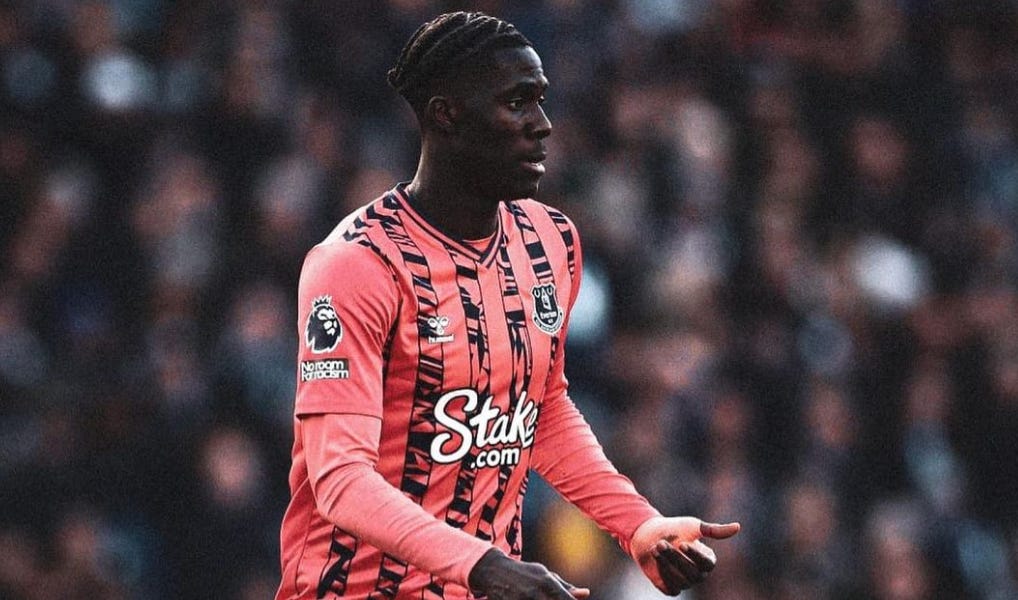
While it falls out of the reporting period, Everton can also point to their work this summer just gone, where a measly total of £3m for Arnaut Danjuma’s loan fee was all that was spent when it comes to fees on new players, with payments for Beto and Yousseff Chermiti delayed, while they also sold academy graduates Ellis Simms and Ishe Samuels-Smith early enough in the transfer window to constitute a ‘near miss’. It is a sign of a club that has stripped back as much as possible, while attempting to remain competitive, in order to make ends meet.
Of course, if Everton have breached by a huge amount in FY 2022-23, then any grace they are given by either the league or the Commission may be extremely limited, but once again, one is hopeful for a common sense approach from the Commission and the league — another harsh punishment would set a dangerous precedent when it comes to clubs who are stuck in financial difficulties, being dealt further blows that in turn make the likelihood of the event these regulations were supposedly brought in to prevent — administration — more likely.
Of course, Everton’s expensively assembled team of legal experts will likely have other arguments to put forward, and the Premier League’s equally as expensively assembled group of lawyers will too.
There is also the rising political pressure, amid news of the now confirmed impending Independent Regulator, for current punishments, under a PSR regime that is soon to be defunct, to be scrapped or at least suspended until the new rules, based on UEFA’s squad-cost model, are in place.
As with each of these cases, the public will have to wait and see what comes out in the wash when the decision is published.
Until then, all we can do is wait.
By Patric Ridge
Patric is a data journalist at Stats Perform and is a regular contributor to Toffee TV and Opta Analyst, while he has attended high-profile events including the UEFA Super Cup and 2022 FIFA World Cup.
(Follow: @PatricRidge)