
World Cup 2026 Takeaways
The highs and lows.

That’s it. It’s over.
The dust is settling after the 2026 World Cup — the biggest ever edition of the tournament. The best? FIFA, and Donald Trump, insist so. There were definitely moments of real quality, and the superstars turned up, for the most part, but there were also plenty of low points.
Over five weeks passed between Mexico getting the tournament going by beating South Africa 2-0, and Spain sealing their second world title by overcoming the scrappiness of Argentina at New York New Jersey Stadium.
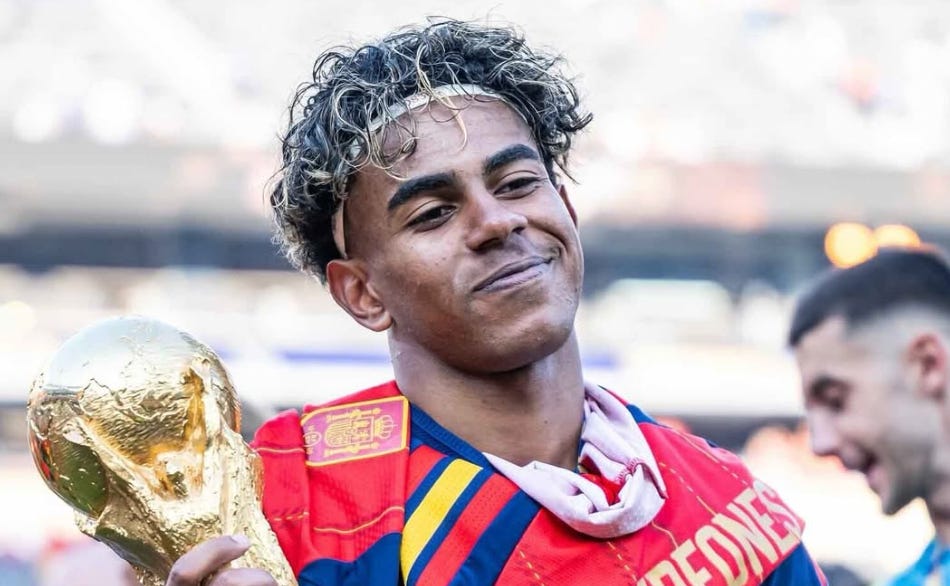
More Than A Game has been with you all the way through it, and here’s a quick recap of the highs and lows.
THE LOWS
Hydration breaks — utter nonsense. Now, when they really are needed, in proper sweltering heat, then of course, go for it. But let’s face it, they’re being used as a way to break the game up into quarters and I am fairly sure FIFA, under Gianni Infantino, will find a way to introduce these across the board, even in the depths of winter. Matches will soon be three-hour events, just like in the NFL. Great!
Celebrity spotting and half-time shows — the Americanisation of the sport was evident throughout; producers obsessed with finding celebrities in the crowd (these were often stoically ignored by BBC and ITV commentators here in the UK). Then, it wrapped up with a ludicrous Superbowl-style half-time show, which took 27 minutes, as FIFA broke their own rules. Yeah, the game’s gone.
England’s display against Argentina — okay, not all of it, but everything from Anthony Gordon’s goal onwards from the Three Lions was atrocious. What followed, as England’s attackers showed what they can do against France before Spain dominated Argentina in the final, was only more frustrating. Thomas Tuchel should be under pressure.
Argentina’s final performance — it was so bad. The tactics were so bad. Lionel Messi, of all people, was so bad! Spain are simply the better team, but Argentina never looked like laying a glove on them — they took 117 minutes to have a single shot. Ridiculously poor.
The Balogun drama — Infantino can say what he likes, a phone call arrived from the White House and FIFA ate itself in order to allow Folarin Balogun to play against Belgium. It backfired hugely for the United States, too.
THE HIGHS
June 16th — the tournament really sparked into life over the course of one day, June 16th, when France beat Senegal, Norway beat Iraq and Argentina beat Algeria. Kylian Mbappé scored twice, Erling Haaland matched him, and then Messi went and bagged a hat-trick. This was the day that kicked off the World Cup of the stars.
The Golden Boot race — A larger tournament was always likely to lead to more goals, but still, the Golden Boot race was a thriller. Mbappé won it in the end, even if contentiously so, given his two crucial goals that proved the difference came in the third-place play-off. Messi was just behind him, and Haaland, Jude Bellingham, Harry Kane and Ballon d’Or holder Ousmané Dembélé were all up there, too.
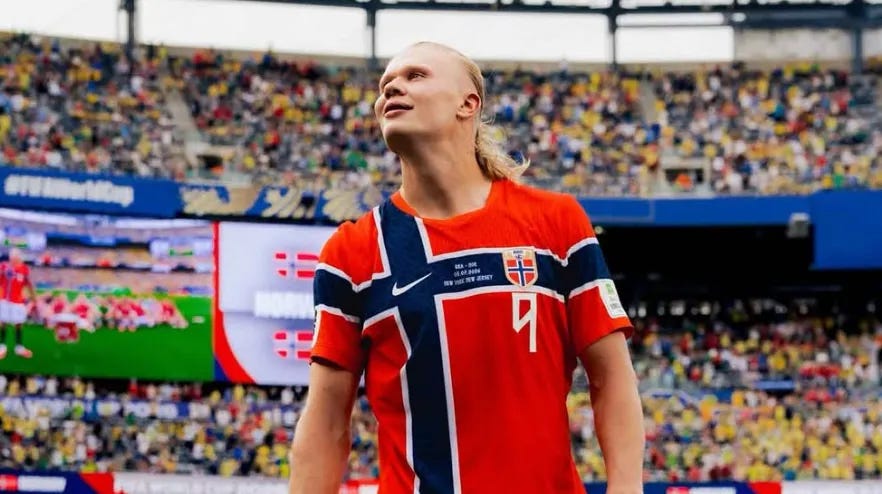
The records — Messi and Mbappé smashed their way through the all-time record scorers list before the group stage was out. For 12 years, Miroslav Klose had held the honour of the highest scorer in World Cup history. Now, Mbappé is six clear of the German, and one clear of Messi, who has surely played at his last World Cup.
Messi’s magic — yes, he failed to show up in the final; he was unable to drag Argentina over the line again, and for some reason, the prevailing narrative around Messi has become that he is a cheat, and ‘not that good’. Ludicrous. Eight goals at a World Cup at the age of 39. Some sensational assists to drag Argentina out of the mud in the knockout stages. The best there is, ever was, and possibly ever will be. He proved it… again.
The third-place play-off — it’s a nonsense of a game, but it was bloody entertaining. 6-4, some outrageously poor defending from both teams (more worrying signs for England?) and some sublime attacking. Michael Olise should have scored about six. A good laugh.
What are your highs and lows?